Subterranean Living and Vitamin D Lamps
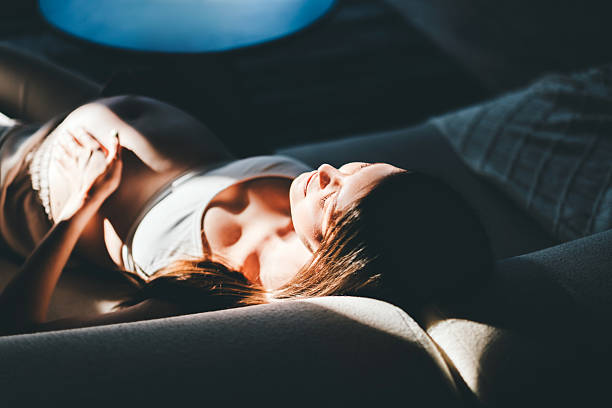
Human beings evolved under the sun. Our circadian rhythms, the internal clock that tells us when to sleep and when to wake, are driven by the daily cycle of bright, blue-rich morning light and the warm, red-orange glow of dusk. When we take that away and move into a subterranean habitat, or a sealed space station, our bodies panic. Without the sun, our production of melatonin gets confused. Our serotonin levels drop. And critically, our skin cannot synthesize vitamin D.
This is where the future of sleep intersects with the colonization of space. For a Mars base or a lunar colony, “morning” will never be a sunrise. It will be a gradual shift in the color and intensity of LED panels. Researchers are now designing “circadian lighting” systems that mimic Earth’s solar spectrum. These lamps will flood the habitat with cool, blue-enriched light for the first eight hours of the “day,” then transition to warm amber tones that signal the body to produce melatonin. This is not a luxury. It is a necessity for mental health, bone density, and immune function in a low-gravity environment.
But the most important innovation may be the vitamin D lamp. In space, astronauts are at high risk for bone loss and depression, both linked to vitamin D deficiency. Standard fluorescent tubes do not produce the ultraviolet B (UVB) radiation needed for the body to make vitamin D. The solution being tested in analog habitats, like the HI-SEAS facility in Hawaii, is a specialized lamp that emits a narrow band of UVB light. These lamps are not tanning beds. They are designed to deliver a controlled dose of UVB for just a few minutes per day, allowing the skin to start vitamin D production without burning. For a colonist living a hundred feet below the Martian surface, this five-minute session will be the functional equivalent of stepping outside for a walk on Earth.
This technology has immediate implications for people who live in windowless apartments, basement offices, or northern latitudes with long, dark winters. The same lamps that will keep a Mars colonist healthy can keep you healthy if your home lacks natural light. Many modern sleep clinics now recommend a combination of a dawn-simulating alarm clock for waking and a UVB lamp for midday vitamin D maintenance. The key is timing. Using a bright blue light lamp too late in the evening will ruin your sleep. Using a UVB lamp without proper instructions can damage your skin. The future of sleep is not just about buying a lamp, but about matching the right light to the right time of your day.
Another challenge for subterranean living is the lack of temperature cues. On Earth, the air cools down at night, signaling the body to lower its core temperature for sleep. In a well-insulated underground habitat, the temperature stays constant. The solution being developed involves dynamic thermal blankets and cooling pads embedded in the mattress, which can drop the surface temperature by a few degrees during the designated sleep period. Paired with the circadian lighting, this creates a complete artificial environment that tells your body, “It is night now. Rest.”
The future of sleep in space is also the future of wearable technology. Sensors in your pajamas or wristband will track not just how much you move, but the real-time production of your melatonin and cortisol levels. When you are living under a mountain on the Moon, you cannot look outside to know if it is morning. Your wearable will tell your circadian lamp when to brighten and when to dim. This closed-loop system between your biology and your environment is the holy grail of circadian optimization.
For those of us who will never leave Earth, these advances are a gift. If you work night shifts, live in a basement apartment, or struggle with seasonal depression, the same tools being built for astronauts can transform your sleep and your health. A vitamin D lamp, a programmable sunrise clock, and a cooling mattress topper are no longer niche products. They are the frontline defense against the modern indoor lifestyle that so closely mimics a cave.
As we look toward colonizing space, we are really learning how to live without the sun. And in doing so, we are learning how to give our bodies the light they desperately need, whether we are under the Earth or under the stars. The future of sleep is not dark. It is brilliantly, carefully, artificially lit.
Dream Blog
Real sleep talk for real people.

Understanding Restless Legs Syndrome and How to Soothe It for Better Sleep
Combination Sleepers and Responsive Bounce