Artificial Dawn Simulators on Starships
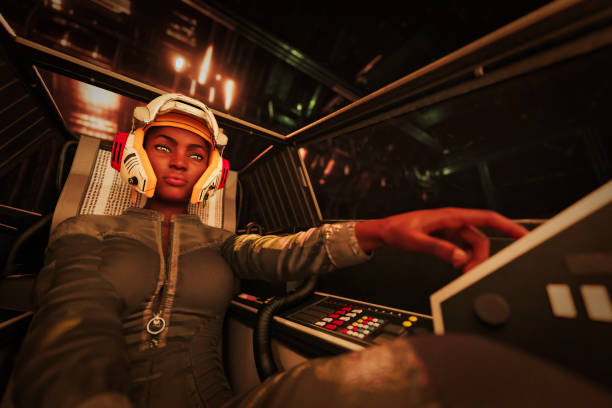
On Earth, our sleep is governed by the sun. Sunlight triggers our circadian rhythm, the internal 24-hour clock that tells us when to feel alert and when to feel drowsy. In space, aboard a starship traveling at unimaginable speeds, the sun will rise and set on a schedule that has nothing to do with human biology. A starship might hurtle through darkness for weeks, then emerge into dazzling sunlight that never dims. Without a clear day-night cycle, our brains would struggle to know when to produce melatonin, the hormone that prepares us for sleep. The result would be chronic jet lag, fragmented rest, and a host of health problems ranging from weakened immunity to impaired decision-making. For a crew tasked with navigating the void, that is more than an inconvenience—it is a danger.
This is where the artificial dawn simulator comes into play. Think of it as a high-tech alarm clock that does not jolt you awake with a blaring sound but instead gently floods your sleeping quarters with light that mimics the natural progression of sunrise. Over the course of twenty to thirty minutes, the light shifts from a deep red-orange to a soft yellow, then to a bright, cool white. Your body registers this gradual increase and begins to suppress melatonin, raising your core temperature and preparing you for wakefulness. In the evening, the process reverses: the lights dim to a warm amber, then to near darkness, signaling your brain that it is time to wind down. On a starship, where windows might show only blackness or blinding glare, these simulators become the sun you never had.
But the technology goes beyond a simple lightbulb. For colonizing space, artificial dawn simulators must be tailored to the unique challenges of the environment. Astronauts on the International Space Station already report that sleep in orbit is less restorative because they witness sixteen sunrises and sunsets every day. On a starship, designers could program simulators to follow a precise 24-hour cycle that matches Earth time, even if the ship is moving faster than the planet rotates. They could also incorporate adjustable color temperatures to compensate for the lack of natural blue light during long journeys through dark regions. Some advanced models might even integrate with wearable sensors that track your heart rate and movement, adjusting the dawn schedule to your personal sleep stage. If your wearable detects you are still in deep REM sleep at the moment your simulator would normally start brightening, it can delay the sunrise by ten or fifteen minutes, letting you finish that crucial dream cycle.
Beyond sleep regulation, artificial dawn simulators could serve a deeper psychological purpose. Isolation and monotony are major hurdles for long space voyages. A simulated sunrise can offer a moment of beauty and calm in an otherwise sterile environment. Imagine your starship’s cabin walls displaying a virtual horizon, the light creeping up over imagined mountains or a digital ocean. This is not just luxury—it is therapy. Studies on Earth have shown that exposure to dawn simulation can reduce depression and anxiety, particularly in people who experience seasonal affective disorder. For a crew member who has not seen a real sunrise in months, that artificial glow might be the difference between a restful night and a sleepless, homesick one.
Of course, no sleep aid works in isolation. Future starship sleep systems will likely combine artificial dawn simulators with other innovations we cover on SleepGoals, such as cooling sheets that manage temperature in microgravity, memory foam mattresses that conform without floating away, and wearable monitors that alert you when your sleep quality drops. The goal is to create an entire environment that tricks the human brain into feeling at home, even when home is a million miles away. As we take our first steps toward colonizing space, we cannot afford to neglect the biology that made us human. A well-rested crew is a safe, efficient, and happy crew. And a starship that brings its own sunrise will carry us further than any rocket ever could.
Dream Blog
Real sleep talk for real people.


The Pineal Gland's Sunset Signal