Your DNA Doesn’t Doom Your Sleep: The New World of Genetic and Epigenetic Sleep Optimization
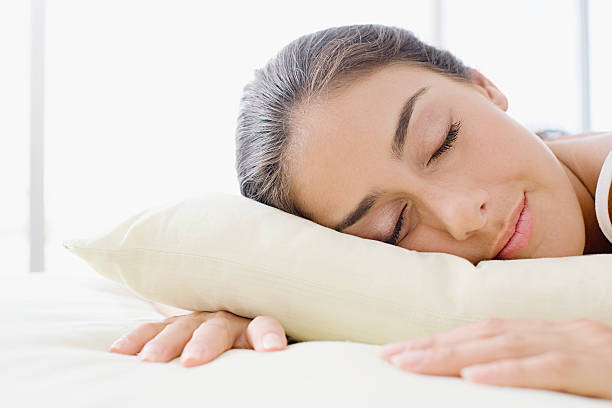
Here’s the key thing to understand: your genes don’t set your sleep destiny in stone. They offer a baseline, a set of tendencies you were born with. Some people naturally produce more of the sleep hormone melatonin at different times of day. Others have genetic variations that make them more sensitive to light or more resilient to stress. Sleep researchers have identified specific gene variants, like those in the PER3 and CLOCK families, that influence your natural sleep-wake cycle, your preferred bedtime, and even how long you sleep when you finally do get to bed. When you take a DNA test, these markers can reveal your chronotype—whether you’re truly a lark, an owl, or something in between. For a long time, that information felt like a life sentence. If your genes say you’re a night owl, you just live with it, right? Not anymore.
That’s where epigenetics comes in. Epigenetics is the study of how your behaviors and environment actually switch your genes on or off without changing the underlying DNA sequence. Think of your genome as a massive control panel with thousands of tiny light switches. Your lifestyle choices—what you eat, when you exercise, how much stress you carry, how much light you see in the evening—these things flip those switches. And here’s the exciting part: you have way more control over those switches than you realize. Sleep is one of the most powerful levers for epigenetic change. When you make even small adjustments to your sleep patterns, you’re not just feeling more rested the next day. You’re actually signaling your body to turn on genes that promote repair, immune function, and memory consolidation, while turning off genes linked to inflammation and stress.
So what does this mean for the future of your sleep? It means that instead of guessing which sleep tips work for you, you’ll be able to get data-driven recommendations based on your own genetic profile. Something like a smart pillow that knows your exact chronotype and adjusts its temperature and firmness accordingly. Or a wearable device that tracks not just your heart rate and movement but also your epigenetic markers, then suggests the precise window for your deepest sleep. None of this is science fiction anymore. Early-stage companies are already experimenting with DNA-based sleep coaching, and the results are promising. But you don’t need to wait for the future to benefit. You can start right now by paying attention to your own internal sleep signals, and then making small, consistent changes based on what your body tells you.
One of the most practical takeaways from this research is that your chronotype isn’t fixed. Your genes give you a tendency, but your daily habits can either reinforce that tendency or nudge it in a different direction. If you’re naturally a night owl but your job demands a 7 a.m. meeting, you can train your body to shift its circadian rhythm gradually. Expose yourself to bright light in the morning, dim screens an hour before bed, and keep a consistent wake time even on weekends. These actions don’t change your DNA, but they change how your body’s genes respond. That’s epigenetics in action. Over weeks and months, you can actually reshape your sleep architecture—the structure of your deep and REM cycles—so that you get better quality sleep even if you can’t control the clock.
Another fascinating angle is how your genes influence your response to sleep aids, like caffeine or melatonin. Some people metabolize caffeine slowly, meaning a cup of coffee at 2 p.m. still interferes with their sleep at midnight. Others have a genetic variant that makes melatonin supplements almost useless. In the future, doctors will be able to look at your genetic profile and tell you exactly which supplements, if any, are worth trying and at what dose. For now, you can experiment on your own with careful attention to how you feel. But don’t be surprised if the day comes when a home DNA kit gives you a personalized sleep plan that feels almost too easy.
The bottom line is that your sleep isn’t just a habit—it’s a biological conversation between your genes and your daily choices. The more you learn about that conversation, the more empowered you become. Genetic and epigenetic sleep optimization isn’t about hacking your body or chasing perfection. It’s about understanding your own needs, respecting your natural tendencies, and making smart adjustments that your genes will reward with deeper, more restorative rest. So tonight, when you lie down, remember that you’re not just sleeping. You’re actively shaping the expression of your DNA. That’s a pretty incredible thought to take with you into the dark.
Dream Blog
Real sleep talk for real people.

Expansion Issues in Cold Weather

Deep Slow Wave The Body Repairman