Insomnia That Requires A Lab Deep Dive
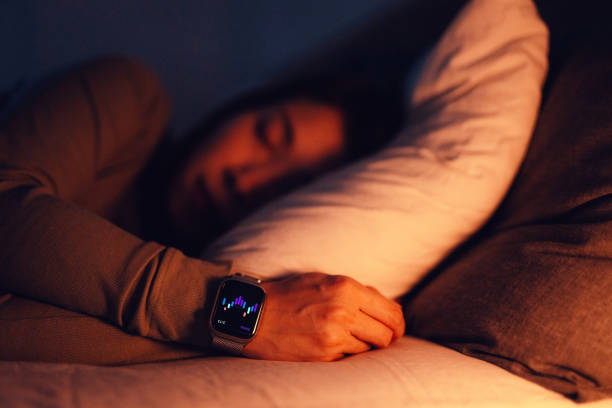
Most people think monitoring sleep means wearing a smartwatch or a fitness ring that gives you a “sleep score” every morning. Those devices are terrific for spotting general patterns, like whether you went to bed too late or how often you tossed and turned. But they have real limits. A wearable can guess when you’re in light sleep versus deep sleep based on your heart rate and movement, but it cannot directly measure your brain waves, your breathing effort, or the oxygen level in your blood every single second of the night. For that level of detail, you need a clinical sleep study—also called a polysomnogram. This is the kind of test that takes place in a sleep lab, where a technician hooks you up to sensors on your scalp, your face, your chest, and your legs, then watches you sleep through a camera. It sounds uncomfortable, and honestly, it can be a little weird the first time, but it is the gold standard for diagnosing conditions that a wearable simply cannot detect.
So when do you know it is time to stop tinkering with your routine and go for that lab deep dive? The clearest sign is when your insomnia is accompanied by something more than just difficulty falling asleep or staying asleep. If you wake up gasping for air, or if your partner tells you that you stop breathing during the night—even for a few seconds—that is a red flag for sleep apnea, which requires a lab study to confirm. Similarly, if you find yourself jerking your legs uncontrollably in bed, or if you have a family history of narcolepsy or restless legs syndrome, a home test simply will not cut it. Another major clue is when your daytime fatigue becomes dangerous. Maybe you nearly fell asleep at the wheel, or you cannot stay awake during a movie even after eight hours in bed. That level of exhaustion despite adequate sleep time often points to a sleep disorder that needs professional measurement.
But here is the tricky part: not all insomnia that warrants a lab study comes with dramatic symptoms like gasping or leg kicking. Sometimes, the signal is more subtle. If you have tried consistent sleep scheduling, good sleep hygiene, and even cognitive behavioral therapy for insomnia without any improvement after several weeks, then your sleep architecture itself may be abnormal. A lab sleep study can reveal whether you are getting enough slow-wave sleep—the deep restorative stage that cleans your brain of metabolic waste—or whether your REM sleep is being cut short. It can also show you if you have a condition called paradoxical insomnia, where you actually sleep more than you think, but your brain fails to register it as restful. The only way to know for sure is to wire yourself up in a lab and let the data speak.
Once you decide to proceed with a lab sleep study, the process is more straightforward than you might imagine. You arrive at the sleep center in the evening, usually around 8 or 9 p.m., and a sleep technician applies the sensors with a gentle, water-soluble paste or gel. You get to sleep in a private room, often with a comfy bed, and you can bring your own pillow and pajamas. The technician monitors you from another room and can come in if a sensor falls off. In the morning, typically around 6 a.m., they remove the sensors and you go home. The results are then interpreted by a board-certified sleep physician, who looks at hundreds of pages of data to diagnose exactly what is happening throughout your night. That report becomes the roadmap for treatment, whether it is a CPAP machine for apnea, medication for restless legs, or targeted therapy for your specific insomnia pattern.
A lab deep dive is not the first step for most people, and it should not be. But when your insomnia resists every reasonable fix, and when your fatigue starts stealing your focus, your mood, and your safety, then it becomes an act of self-respect to get the full picture. Your wearable can tell you that you slept poorly. A lab study can tell you why. And that reason is the difference between guessing and actually healing. If your sleep has become a source of struggle rather than restoration, consider this your invitation to stop wondering and start measuring. The lab is not your last resort. It is your next smart step.
Dream Blog
Real sleep talk for real people.

The 30-Minute No-Screen Rule Reality
How Cycles Change as You Age