Binaural Beats Tested in Sleep Labs
First, a quick refresher on how binaural beats are supposed to work. When you wear headphones and hear a 200 Hz tone in your left ear and a 210 Hz tone in your right ear, your brain processes the 10 Hz difference as a rhythmic pulse. That 10 Hz frequency falls in the alpha range, which is associated with relaxed wakefulness. Lower frequencies, like 4 Hz in the delta range, are linked to deep sleep. The theory is that by exposing your brain to these beat frequencies, you can gently guide your brainwaves toward the state you want. Sleep labs have tested this hypothesis with mixed but ultimately promising findings.
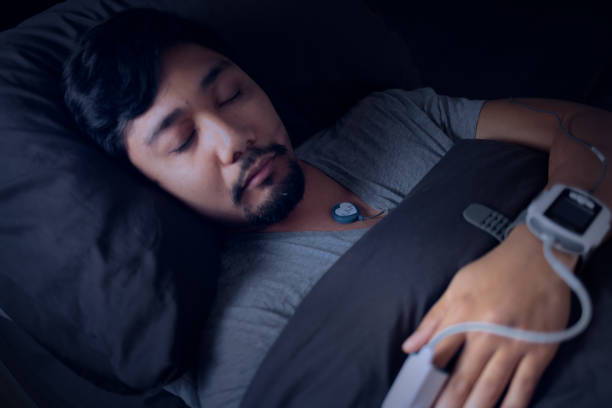
One of the most cited studies comes from the journal Frontiers in Human Neuroscience, where researchers monitored participants in a sleep lab while they listened to binaural beats in the delta range (around 3 Hz) for thirty minutes before bed. Using electroencephalography, or EEG, to measure brainwave activity, the team found that participants who listened to the beats fell asleep faster and spent more time in slow-wave sleep compared to a control group listening to a plain tone. Slow-wave sleep is the deepest, most restorative stage of sleep, crucial for memory consolidation and physical recovery. The study suggests that binaural beats can indeed help prime the brain for high-quality rest, at least in a lab environment.
However, not every experiment has been a home run. Another study published in Psychophysiology found that while binaural beats increased theta brainwave activity—linked to drowsiness and light sleep—they did not significantly improve subjective sleep quality or total sleep time in all participants. The difference, researchers believe, may come down to individual susceptibility. Some people’s brains are more responsive to auditory entrainment than others, much like how some people fall asleep to white noise while others find it distracting. The key variable seems to be whether you are already prone to anxiety or racing thoughts at bedtime. For those individuals, binaural beats may act as a gentle anchor, reducing cognitive arousal and making it easier to drift off.
Sleep labs have also examined the role of frequency. A 2020 meta-analysis in Sleep Medicine Reviews combined data from multiple studies and concluded that delta-frequency binaural beats (1–4 Hz) were most effective for improving sleep onset and depth. Theta-range beats (4–8 Hz) helped with relaxation but were less potent for actual sleep. Importantly, the analysis noted that the beats must be listened to through headphones—speakers won’t produce the same effect because each ear needs its own distinct frequency. This is a practical point for anyone trying this at home: earbuds or over-ear headphones are non-negotiable.
Beyond the lab, there’s a growing consensus that binaural beats work best as part of a broader sleep hygiene routine. They are not a miracle cure for chronic insomnia, but they can be a powerful tool when combined with consistent bedtimes, a cool room, and reduced screen time. Some sleep specialists now recommend them as a non-pharmaceutical option for people who struggle with “tired but wired” syndrome—that frustrating state where you’re exhausted but your mind won’t shut off. Because binaural beats are simply sound waves, they carry no side effects, no risk of dependency, and no morning grogginess.
If you decide to try binaural beats for optimizing your sleep, look for tracks specifically designed for delta or theta frequencies. Many free apps and streaming services offer them, but beware of low-quality recordings that include distracting background noises or advertisements. Start with a ten-minute session before bed, using comfortable headphones, and keep the volume at a level where the beat is barely audible. Louder is not better; the brain responds to the subtle difference, not the loudness. Over a week or two, you can gradually increase the listening time to thirty minutes.
At the end of the day, binaural beats are not a replacement for good sleep habits, but they are a scientifically supported addition to your sleep toolkit. Sleep lab results show that for many people, these auditory cues can ease the transition into deep, restorative rest. And in a world where quality sleep is increasingly hard to come by, any gentle, side-effect-free aid is worth a try. As researchers continue to refine the frequencies and delivery methods, binaural beats may become a standard feature of the soundscapes and auditory masking tools that help us all sleep better.
Dream Blog
Real sleep talk for real people.


Microcoils as Comfort Layer Innovation
How Gentle Brain Stimulation Could Unlock Deeper Sleep