Tribes Without Blue Light Today
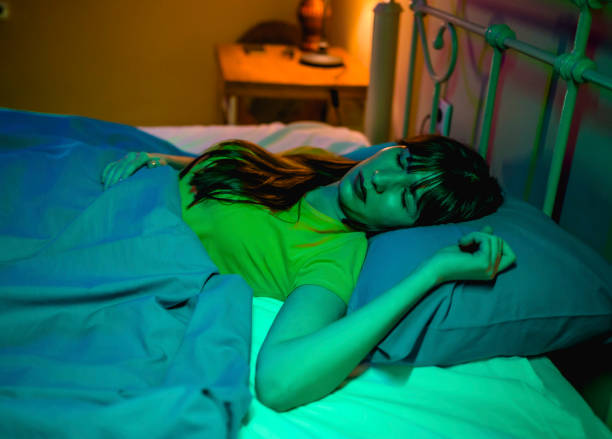
Your body’s internal clock, known as the circadian rhythm, is governed by a cluster of nerve cells in the brain called the suprachiasmatic nucleus. This master clock responds primarily to light, especially the blue wavelengths that dominate daylight and digital screens. When your eyes detect blue light in the evening, your brain suppresses melatonin production—the hormone that signals it’s time to sleep. Your ancestors had no such problem. At sunset, the only light available was the warm, dim glow of firelight, which contains almost no blue wavelengths. This meant that melatonin levels rose naturally, preparing the body for deep, restorative sleep about two hours after darkness fell.
Modern research has confirmed what our ancestors lived by instinct. Studies published in the journal Current Biology have shown that even a single hour of tablet use before bed can suppress melatonin by more than twenty percent. Over time, this chronic suppression leads to delayed sleep onset, reduced rapid eye movement or REM sleep, and fragmented sleep cycles. The result is that you may spend eight hours in bed but wake up feeling as though you barely rested. This disconnect is a hallmark of our blue-light-saturated environment, and it is a direct departure from the ancestral sleeping patterns that optimized human health for millennia.
Reclaiming those ancestral sleeping patterns doesn’t require moving off the grid. It requires understanding that your eyes evolved to see blue light as a signal for morning, not bedtime. To mimic the natural light cycle, consider wearing amber-tinted glasses for two to three hours before sleep. These glasses filter out blue wavelengths while allowing other light to pass through, so you can still read or interact with screens without confusing your brain. Alternatively, many devices now offer a “night shift” mode that warms the display, but these settings typically reduce only a fraction of the blue light emitted. True ancestral sleep hygiene means turning off all screens at least ninety minutes before you intend to sleep.
Beyond screens, your home’s lighting matters more than you might think. Standard LED bulbs are rich in blue light, even when dimmed. Swapping out bulbs for dimmable warm-white LEDs with a color temperature of 2700 Kelvin or lower can dramatically reduce your evening blue light exposure. Better yet, use salt lamps or candles to create a fire-like ambiance in the hours leading up to bed. These small changes align your environment with the ancient conditions under which your sleep biology evolved, allowing melatonin to rise naturally and your sleep to deepen.
Ancestral sleeping patterns also involve sleeping in complete darkness. This means blackout curtains, covering any LED indicators on electronics, and even wearing a sleep mask if necessary. Your skin contains photoreceptors that can detect light, so even low levels of ambient light can disrupt your circadian rhythm through pathways you cannot consciously feel. When you achieve true darkness, your body enters a state called “scotopic sensitivity,” where your pineal gland produces optimal melatonin levels. This is the same state your ancestors experienced every night.
There is another ancestral lesson about timing. Before artificial light, most people slept in two distinct blocks—a “first sleep” after sunset, a period of wakefulness around midnight for reflection or intimacy, and a “second sleep” before dawn. Modern sleep science confirms that this biphasic pattern may actually be more natural than our compressed eight-hour block, particularly in winter months when nights are long. Experimenting with a gentle middle-of-the-night wake period—even just fifteen minutes of quiet reading by candlelight—can sometimes improve overall sleep quality for those who struggle to stay asleep.
Ultimately, the science of sleep is the science of returning to our roots. Your body’s sleep architecture was designed for a world without blue light after dark. By respecting that design, you are not rejecting modernity—you are using its tools wisely to restore what has been lost. Start tonight. Dim the lights, put the phone away, and let your ancient biology guide you into a rest that screens cannot offer. Your ancestors knew the secret, and now you do too.
Dream Blog
Real sleep talk for real people.

The Salt Intake and Fluid Retention Link