The Towel Trick for Diagnosis
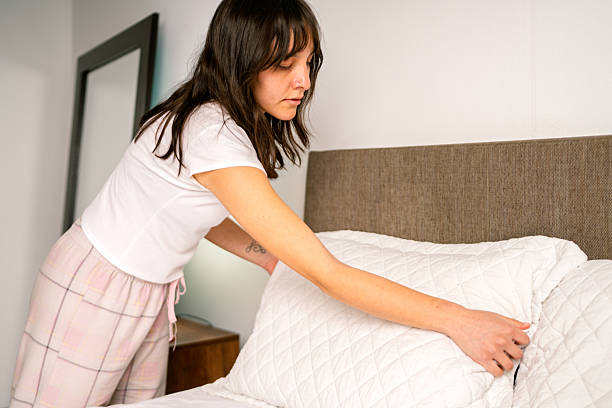
First, let us understand why pillow loft matters more than you think. Loft is the height of your pillow when it is fluffed and supporting your head. The wrong loft forces your neck into an unnatural angle. If you sleep on your back, a pillow that is too high tilts your chin toward your chest, narrowing your airway and potentially triggering snoring or sleep apnea. If you sleep on your side, a pillow that is too low lets your head drop sideways, straining the muscles and joints along one side of your neck. And if you sleep on your stomach, you generally need the lowest possible loft to keep your spine straight. Most people do not know their ideal loft, so they buy pillows based on feel or marketing claims. That is where the towel trick comes in.
Here is how it works. Lie down on your bed in your usual sleep position. Take a standard bath towel, fold it lengthwise into a long strip about four inches wide, and then roll it up into a firm, cylindrical shape. This rolled towel simulates a pillow. Place it under your head exactly where your pillow would go. Now, check your neck and spine alignment. For back sleepers, your forehead and chin should be level, meaning the line from your ear to your shoulder runs roughly perpendicular to the bed. For side sleepers, bring your arm up to check: your head should rest comfortably on the rolled towel without your neck bending up or drooping down. If your head tilts upward, the towel is too high. If it sags, the towel is too low. Adjust by unrolling or adding a second towel until you find that sweet spot where your spine feels neutral. For stomach sleepers, lie face down and turn your head to one side. The rolled towel should be as flat as possible—just enough to keep your nose off the mattress without lifting your neck.
Once you find the correct rolled-towel height, measure it. Take the rolled towel off the bed, lay it flat, and use a ruler to measure its thickness in inches. That number is your ideal pillow loft. Write it down. The next time you shop for a pillow, look for one with that loft measurement. If you sleep in multiple positions, test each one and average the results, or pick a pillow with adjustable fill so you can modify the loft yourself. This trick works because it removes the guesswork. Pillow manufacturers often use vague terms like “medium loft” that mean different things to different brands. With your towel-based measurement, you become your own pillow sleuth.
But the towel trick is not just about buying a new pillow. It can also help you diagnose a failing pillow. If your current pillow has lost its loft after months or years of use, the towel test will reveal a gap between your head and the mattress when you lie down. In that case, your pillow is too flat, and you will feel the strain. Many American adults replace their pillows far too infrequently—think of how long you have had yours. A good rule of thumb is to replace pillows every eighteen months to two years, but the towel trick tells you the truth sooner. If the rolled towel feels better than your actual pillow, it is time for an upgrade.
Finally, remember that the towel trick is a diagnostic tool, not a permanent solution. Sleeping on a rolled towel every night is not comfortable for most people, nor is it supportive across an entire night of movement. Use it to find your numbers, then invest in a proper pillow that matches. Pair that pillow with a solid mattress, cooling sheets if you sleep hot, and a consistent sleep schedule. At SleepGoals, we believe that optimizing your sleep environment is one of the most powerful ways to improve your health, your mood, and your daily performance. The towel trick is a simple, free, and reliable first step. So tonight, grab a towel, lie down, and let your neck tell you what it needs.
Dream Blog
Real sleep talk for real people.


Teens Have a Delayed Sleep Phase

Millie Pad Baby Movement Detection