The Shift Work Pill To Erase Carcinogens
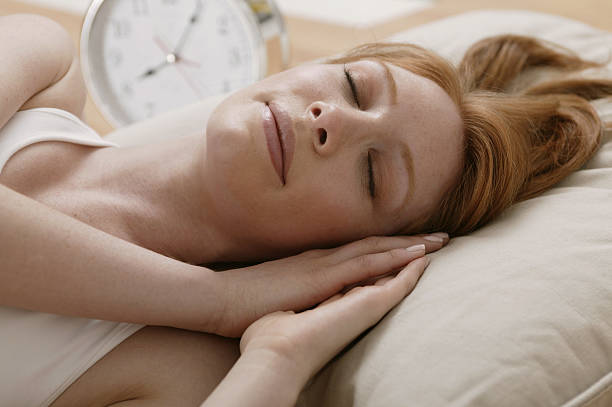
The idea of a “shift work pill” isn’t science fiction anymore. Researchers are developing compounds that target the core machinery of our internal clock—specifically the proteins CLOCK and BMAL1. These proteins drive the daily ebb and flow of our cellular functions, including DNA repair. When we disrupt our sleep schedule, we break that repair cycle, allowing damaged DNA to accumulate. This accumulation is a direct pathway to cancer. A pill that resets or strengthens this clock could theoretically prevent that damage from happening in the first place. Think of it like a reset button for your circadian rhythm. It wouldn’t just help you feel awake or sleepy on demand—it would protect your cells from the long-term consequences of fighting against Earth’s natural light-dark cycle.
But the implications go far beyond helping nurses and truck drivers. The future of sleep is increasingly tied to humanity’s ambition to leave the planet. On Earth, our bodies evolved to synchronize with a 24-hour solar day. On Mars, that cycle stretches to about 24 hours and 39 minutes. On a spacecraft heading to deep space, there is no day or night at all. Astronauts already struggle with circadian disruption during long missions, experiencing mood changes, cognitive decline, and immune suppression. These are the same biological cracks that can lead to cancer over a lifetime. If we want to colonize space, we need tools that can optimize sleep and circadian health in environments where the sun never sets or never rises.
This is where the shift work pill fits into the broader picture of circadian optimization for space colonization. Imagine a settler on Mars who works in a pressurized habitat under constant artificial lighting. Without a way to stabilize their internal clock, their DNA repair mechanisms falter, and cancer risk climbs. A targeted circadian compound could mimic the natural signals of sunrise and sunset, telling every cell in the body exactly when to repair, replicate, and rest. It wouldn’t replace sleep—it would make sleep more restorative, even in an alien environment. This is the kind of breakthrough that turns space travel from a survival hazard into a sustainable lifestyle.
At SleepGoals, we believe that understanding these future technologies starts with mastering the basics today. The same principles that make a shift work pill possible also explain why your current sleep habits matter so much. When you prioritize a consistent bedtime, block out blue light after dark, and create a cool, dark sleep space, you’re already supporting your circadian rhythm. You’re giving your body the chance to complete its nightly DNA patrol. Wearables, cooling sheets, and even smart mattresses can help you monitor and optimize that process right now. But the horizon is even bigger. We’re moving toward a world where sleep aids are not just about falling asleep faster, but about fundamentally preventing the diseases that come from broken clocks.
The future of sleep is also the future of human expansion. Whether you’re pulling a night shift at a hospital or dreaming of a homestead on Mars, your biology craves consistency. The shift work pill represents hope—not just for erasing carcinogens, but for proving that we can engineer our way out of our own biological limits. As we refine these tools, the line between “good sleep” and “survival” will blur. For now, the best strategy is to honor your body’s ancient rhythm. But keep an eye on the science. One day soon, we might all have a circadian safety net, whether we’re on Earth or a million miles away.
Dream Blog
Real sleep talk for real people.


tACS Phase-Locked to Slow Waves

Blue Light's Specific Wavelength Damage