Are EEG Headbands Accurate Enough to Improve Your Sleep?
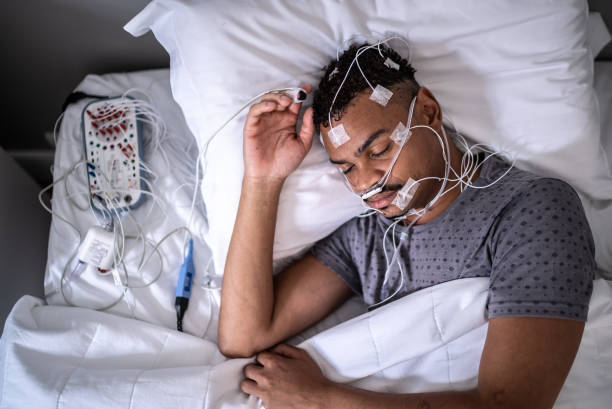
Let’s start with how they actually work. Your brain produces electrical signals, and those signals change depending on whether you’re awake, in light sleep, in deep sleep, or in REM sleep. An EEG headband places small sensors against your forehead, picking up those electrical patterns. The device then uses algorithms to figure out which sleep stage you’re in at any given moment. That’s fundamentally different from a wristband or ring, which infer sleep from movement and heart rate. EEG measures the organ that actually controls sleep, which gives it a major theoretical edge.
In clinical settings, EEG is the gold standard for sleep staging. But consumer headbands are not medical devices. They use fewer sensors, often just two or four placed on the forehead, while a sleep lab might use a dozen or more placed across your scalp, near your eyes, and on your chin. This reduced coverage means the headband has to interpret a limited signal. Still, studies have shown that some consumer EEG headbands can match sleep lab results about 80 percent of the time for deep sleep and REM detection. That’s not perfect, but for most people, it’s useful enough to identify patterns.
Where accuracy really matters is deep sleep. Deep sleep is when your body repairs tissue, clears metabolic waste from your brain, and consolidates memories. If you think you’re getting two hours of deep sleep but you’re actually getting forty minutes, that’s a big deal. EEG headbands are generally pretty good at spotting slow-wave activity, which defines deep sleep. They’re less reliable at distinguishing between light sleep and REM, but those stages are less critical for everyday recovery.
So the real question isn’t just about accuracy. It’s about what you do with the information. A headband that gives you a 75 percent accurate score for deep sleep can still be transformative if it helps you notice a trend. Say you see that your deep sleep always drops after you drink alcohol, stay up late, or eat a heavy meal before bed. That’s actionable data. You can change your behavior and then watch your deep sleep climb over the following nights. For that kind of relative comparison, exact clinical precision isn’t necessary. You don’t need to know that you got exactly 1 hour and 12 minutes of deep sleep. You need to know if last night was better than last Tuesday.
Another benefit is that these headbands often pair with a sleep coaching app. They might offer guided breathing exercises, sound masking, or gentle alarms that wake you at the optimal moment in your sleep cycle. The EEG data drives all of that. A wearable that just counts your movement can’t tell when you’re in light sleep and wake you then. An EEG headband can, which means you wake up feeling less groggy. That’s a practical advantage you can use every single morning.
Still, there are drawbacks. Many people find the headband uncomfortable, especially if you’re a side sleeper. The sensor pads need to stay in contact with your skin, which can be tricky if you toss and turn. Some models require a gel or a damp cloth for conduction, adding friction to your bedtime routine. And battery life can be short, so you’ll need to remember to charge it, which is one more chore before you can sleep. If the device is uncomfortable, you won’t wear it, and then accuracy doesn’t matter at all.
There’s also the risk of obsessing over your sleep score. Seeing a low number can spike your anxiety, which then keeps you awake the following night, creating a vicious cycle. That’s a real problem for people with insomnia. Some experts actually recommend against using any sleep tracker if you’re prone to health anxiety. On the other hand, many headbands now include a “no display” mode or a morning report that emphasizes trends rather than nightly grades. That can help you stay sane.
So are these devices accurate enough to improve your sleep? For most American adults, the answer is a cautious yes, with one big caveat. Use the data as a guide, not a verdict. Focus on week-to-week patterns rather than single nights. And if you have a clinical sleep disorder like sleep apnea or narcolepsy, don’t rely on a headband to diagnose it. See a doctor. But if you’re a generally healthy person who just wants to understand your sleep architecture better and nudge your habits in the right direction, an EEG headband can be a genuinely valuable tool. It gives you a window into your brain that no wristwatch can match. The accuracy is good enough to matter, as long as you remember that the goal isn’t a perfect score. The goal is waking up feeling rested and ready for the day.
Dream Blog
Real sleep talk for real people.


Why Sharing a Bed No Longer Means Sharing a Blanket