Motion Sensors Triggering Low Red Lights
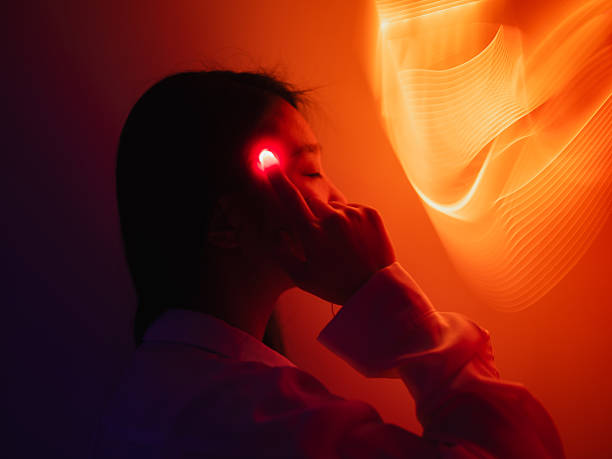
When you think about monitoring sleep, your mind might jump to a smartwatch or a bedside sleep tracker. Those are excellent tools, but they often require you to wear something on your body, which can be uncomfortable for light sleepers. Motion sensors, by contrast, work without any contact. They sit in the corner of your room or on a nightstand, using passive infrared technology to detect the subtle shifts of your body as you move through sleep stages. When paired with a low red light, these sensors offer a gentle feedback loop that helps you understand your sleep quality without jolting you awake.
The magic of low red light lies in its effect on your circadian rhythm. Blue light from screens and standard white bulbs suppresses melatonin, the hormone that guides you into deep sleep. Red light, especially at low intensity, has the weakest effect on melatonin production. So when a motion sensor triggers a soft red glow, it signals a potential disturbance—perhaps you rolled over restlessly or sat up briefly—without flooding your eyes with sleep-disrupting wavelengths. This is crucial for monitoring sleep accurately. If a bright light wakes you fully, you might forget the movement entirely, skewing your nightly data.
Integrating motion sensors with low red lights into your smart home setup is surprisingly straightforward. You can connect a motion sensor to a smart bulb that automatically dims to a deep red when movement is detected between certain hours. Many systems allow you to set a “sleep mode” where the red light remains off unless significant movement occurs, such as getting out of bed. Over time, this system logs patterns: how often you move during the night, whether you tend to toss at 2 AM, and how long it takes you to settle back down. This data, viewable on your phone in the morning, becomes a window into your sleep architecture.
Why does this matter for your sleep goals? Because knowledge is power, and gentle knowledge is sustainable. If you rely solely on a wearable to monitor sleep, you know how often you wake, but you might not realize that your bedroom’s ambient light is actually causing those awakenings. Motion sensors with red lights give you a cause-and-effect picture. For example, you might notice that every time the furnace kicks on, the motion sensor triggers a red flash, indicating you stirred. That insight could prompt you to adjust your thermostat schedule or use a quieter HVAC filter.
Another practical benefit is for couples. If one partner is a restless sleeper and the other is sensitive to movement, a motion sensor red light can act as a gentle alert. Instead of turning on a phone screen or a bedside lamp that wakes both people, the sensor silently notes the movement and, if desired, turns on a dim red strip along the baseboard. This allows the restless partner to see where they are in the room without fumbling for a light switch, reducing the chance of a fall or a loud stumble.
For those concerned about privacy, motion sensors are a win. They detect body heat and movement pattern, not video or audio. Your sleep data remains anonymous and local to your home network, unless you choose to upload it to a health platform. This makes them an appealing middle ground between no tracking at all and constant camera surveillance.
It is worth noting that motion sensors are not a perfect sleep monitoring solution. They cannot measure heart rate or brain waves, so they won’t tell you exactly what sleep stage you are in. But for many adults, the goal is not clinical accuracy—it is consistency and comfort. The fact that a low red light does not disturb your sleep means you can gather data night after night without the tracker itself becoming a source of insomnia. Over weeks, you will start to see trends: perhaps you sleep more deeply in a cooler room, or you move less when you avoid caffeine after 4 PM.
Setting up this system takes less than an hour. A simple Wi-Fi motion sensor and a red smart bulb can be purchased at any home improvement store. Program the bulb to glow red only between your targeted sleep hours and set the sensor to trigger it only when movement lasts longer than a few seconds—this prevents false triggers from a passing cat or a shift in air conditioning currents. Soon, the red glow becomes a comforting presence, a silent guardian that watches over your sleep without demanding your attention.
In the journey toward better rest, the smallest adjustments often yield the biggest returns. Motion sensors triggering low red lights represent a philosophy of sleep monitoring that respects your need for darkness, responds to your body’s signals, and offers insight without intrusion. Whether you are a tech enthusiast or a skeptical sleeper, this simple integration can help you reclaim the night, one gentle red glow at a time.
Dream Blog
Real sleep talk for real people.

Sweat Wicking Threads for Night Sweats

Thermo-Electric Cooling Grids Without Water