Ironing Cotton Inhibits Airflow
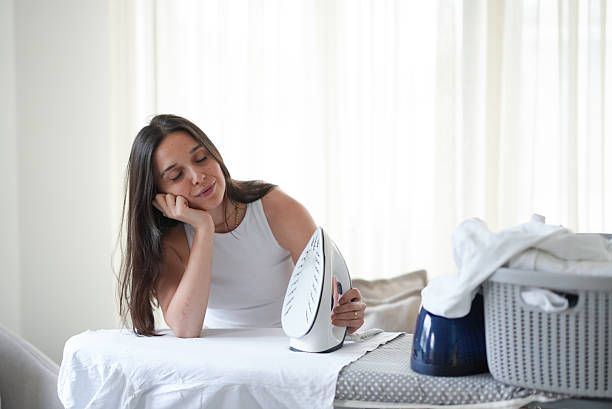
Let’s start with how cooling sheets work. Most cooling sheets are made from natural fibers like cotton, linen, or bamboo, or from high-tech synthetic blends designed to wick moisture and promote airflow. Cotton, in particular, is prized because its fibers have tiny gaps that allow air to circulate freely. That airflow is what carries away the body heat you generate during the night. When you lie down, your body warms up, and those little air pockets in the weave let that heat escape. It’s a passive, natural cooling system. But here’s the problem: when you iron cotton sheets, you compress those fibers. The heat and pressure flatten the yarns, closing off many of those small air channels. The result is a denser, smoother fabric that looks neat but behaves more like a sheet of paper than a breathable textile. It may feel crisp to the touch, but it won’t let air pass through as easily, which means your body heat will get trapped between you and the mattress.
This isn’t just a minor cosmetic issue. A study published in the journal Textile Research Journal found that ironing can reduce the air permeability of cotton fabric by as much as 20 to 30 percent. That’s a significant drop if you rely on that airflow to stay cool. For someone sleeping in a warm bedroom or living in a humid climate, that reduction can be the difference between drifting off comfortably and waking up sweaty and restless. The principle is simple: the more you press those fibers flat, the less room there is for air to move. And without airflow, your cooling sheets lose much of their cooling power.
Of course, no one expects you to never iron again. If you love the look of pressed sheets, you don’t have to abandon them entirely. But if you’re serious about optimizing your sleep temperature, there are smarter ways to care for your cooling sheets. First, consider ironing only the top face of the fabric, and use a steam setting—steam helps relax the fibers without crushing them as much as a dry iron. Better yet, try a light steaming instead of ironing. A handheld steamer lifts wrinkles without applying the heavy pressure that closes off airflow. Another alternative is to pull your sheets out of the dryer just before they’re completely dry and fold them immediately. This reduces wrinkles naturally, without heat and pressure.
If you must iron, do it only on the parts of the sheet that show, like the pillowcase and the top hem, and avoid pressing the main body where your body lies. And always use a low to medium heat setting, never the highest cotton setting. High heat not only compresses fibers but can also weaken them over time, shortening the life of your sheets. For cooling sheets made from moisture-wicking synthetics or bamboo blends, ironing is even riskier. These materials are often designed with micro-fibers that can melt or fuse under high temperatures, permanently damaging their breathability. Always check the care label. Some cooling sheets are labeled “no iron” or “wrinkle-resistant” for a reason—they are engineered to stay smooth without needing ironing.
Beyond ironing, think about your washing routine as a whole. Harsh detergents and fabric softeners can also coat cotton fibers with a residue that reduces airflow. Fabric softener works by depositing a waxy film that makes fibers feel soft, but that film also clogs the microscopic air spaces. For cooling sheets, stick with a mild, fragrance-free detergent and skip the softener entirely. Wash in cool or warm water, not hot, and dry on a low setting or hang them to dry. These steps help maintain the open weave that allows your sheets to breathe.
Ultimately, the goal of cooling sheets is to help you sleep cooler, and that means preserving the fabric’s natural ability to let air pass through. Ironing works directly against that. If you can’t give up the crisp look, at least use gentler methods and limit how much you press the surface. Your sleep temperature is too important to sacrifice for a wrinkle-free appearance. When you lie down tonight, remember that a little looseness in your sheets is not a flaw. It’s a feature—one that keeps the air moving and your body cool.
Dream Blog
Real sleep talk for real people.


Prostate Enlargement and Male Sleep Loss
Sweat Wicking Threads for Night Sweats