Camping Trips Reset Your Circadian Rhythm
Your circadian rhythm is your body’s internal 24-hour clock. It governs when you feel sleepy, when you feel alert, and when your body releases hormones like melatonin and cortisol. The problem is that modern life wrecks this clock. We stay up late under bright indoor lights, stare at phone screens in bed, and wake up to the harsh glare of an alarm clock in a room that’s still dark. This constant mismatched light exposure confuses your brain. It tells your body it’s daytime when it’s actually 11 PM, and it delays the release of melatonin, the hormone that signals it’s time to sleep. The result? You fall asleep later, sleep less deeply, and wake up feeling unrested.
Now imagine camping. You’re outside from late afternoon onward. The sun is setting, and the light around you is getting warmer, dimmer, and redder. That’s exactly what your brain evolved to see as a signal to start winding down. After sunset, the only light you get is the soft glow of a campfire or a dim headlamp. There are no overhead LEDs, no television screens, no phone notifications lighting up your face. Your eyes are getting the ancient signal that says, “It’s dark now. Prepare for sleep.” Your pineal gland gets the message, and melatonin production ramps up naturally. Within a day or two, most people find themselves yawning by 9 PM and sleeping more deeply than they have in months.
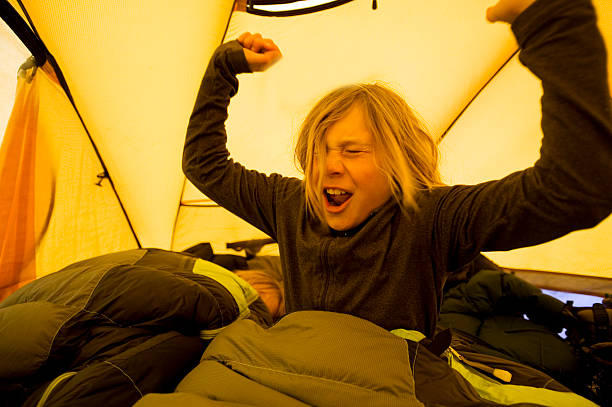
But it’s not just the evening light that helps. The morning light is just as critical. When you’re camping, you wake up because the sun is rising. Your tent glows with sunlight, birds are chirping, and your body is bathed in high-intensity blue light as soon as you open your eyes. This is the most powerful cue for setting your circadian rhythm. Morning sunlight hitting your retinas tells your brain, “Day has started,” and it sets a timer that will make you sleepy roughly 14 to 16 hours later. In your normal life, you might get no morning sunlight at all—you wake up in a dark bedroom, fumble for your phone, and then drive to work in a car. You might not get any bright light exposure until you step outside for lunch. That delays your clock and keeps you in a perpetual state of lag. One weekend of camping, with consistent morning sunlight and evening darkness, can shift your internal clock back in sync.
The research backs this up. A well-known study from the University of Colorado Boulder found that after just one weekend of camping without artificial light, participants’ melatonin levels rose about two hours earlier than normal. Their sleep onset shifted earlier. They woke up feeling more refreshed. And their sleep duration actually increased. That’s a remarkable effect for something as simple as sleeping on the ground in a tent. You don’t even need to be a hardcore backpacker. Car camping, where you drive to a site and set up a comfortable air mattress, works just fine. The key is the light environment, not the level of physical exertion.
For Americans stuck in the cycle of poor sleep—blaming stress, blaming your mattress, blaming your late-night Netflix habit—a camping trip offers a reset that addresses the root cause. It retrains your brain’s clock using the most powerful tool your body has: natural light at the right times. You’ll probably find that after two nights outside, you’re falling asleep earlier and waking up naturally with the sun. And when you come home, if you can keep that pattern going by limiting artificial light in the evening and getting morning sunlight, the benefits can last for weeks.
So before you spend another hundred dollars on a sleep mask or a new pillow, consider a tent and a sleeping bag. Your circadian rhythm is begging for a reset. Give it a weekend under the sky, and you might just get the best sleep you’ve had in years.
Dream Blog
Real sleep talk for real people.

Camping Pad Bedroom Setup Airflow
The Bed-in-a-Box Break-In Period: Why Your New Mattress Needs Time